What is RDD
- Resilient -- if data is lost, data can be recreated
- Distributed -- stored in nodes among the cluster
- Dataset -- initial data comes from some distributed storage
What is RDD
- A big data collection of data with following properties:
- Immutable
- Distributed
- Lazily evaluated
- Cacheable
Immutable and Distributed
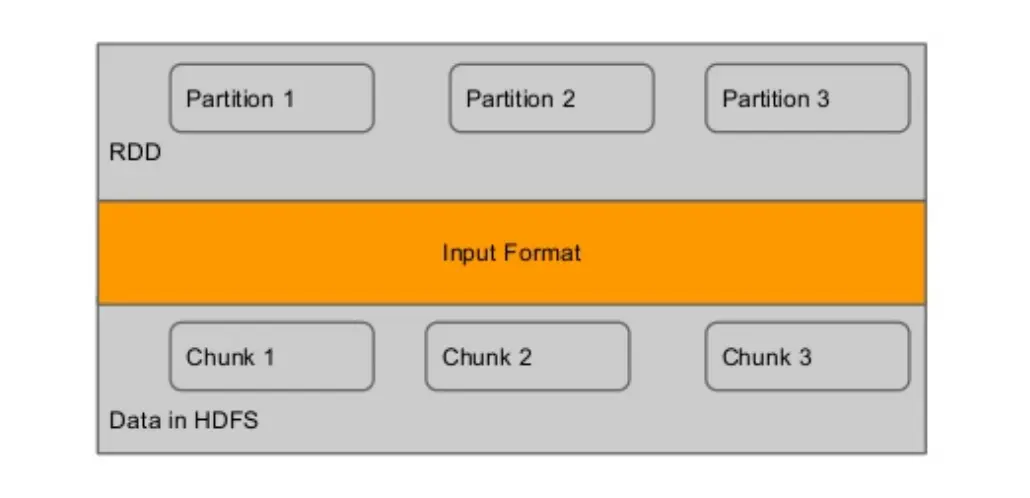
Partitions
- Logical division of data
- Derived from Hadoop Map/Reduce
- All input, intermediate and output data will be represented as partitions
- Partitions are basic unit of parallelism
- RDD data is just collection of partitions
Partition from hdfs data
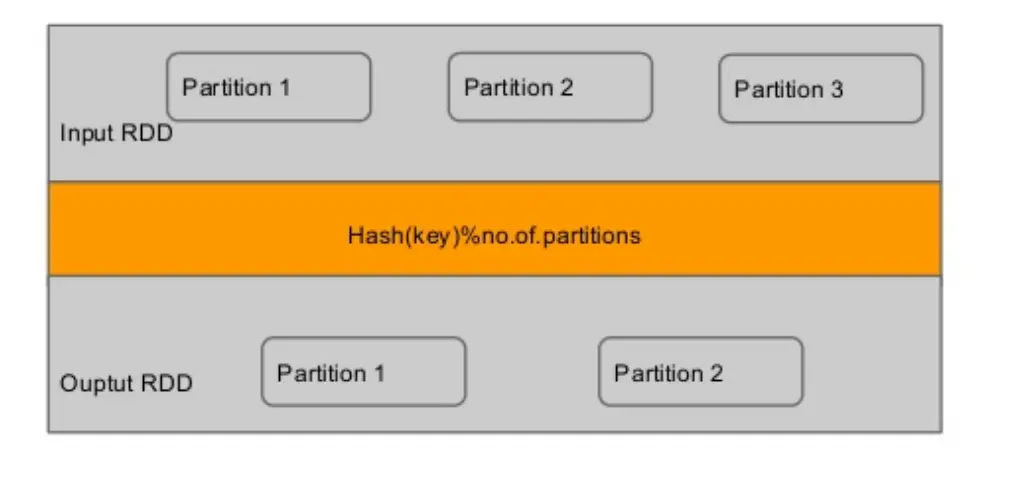
Hash partitions
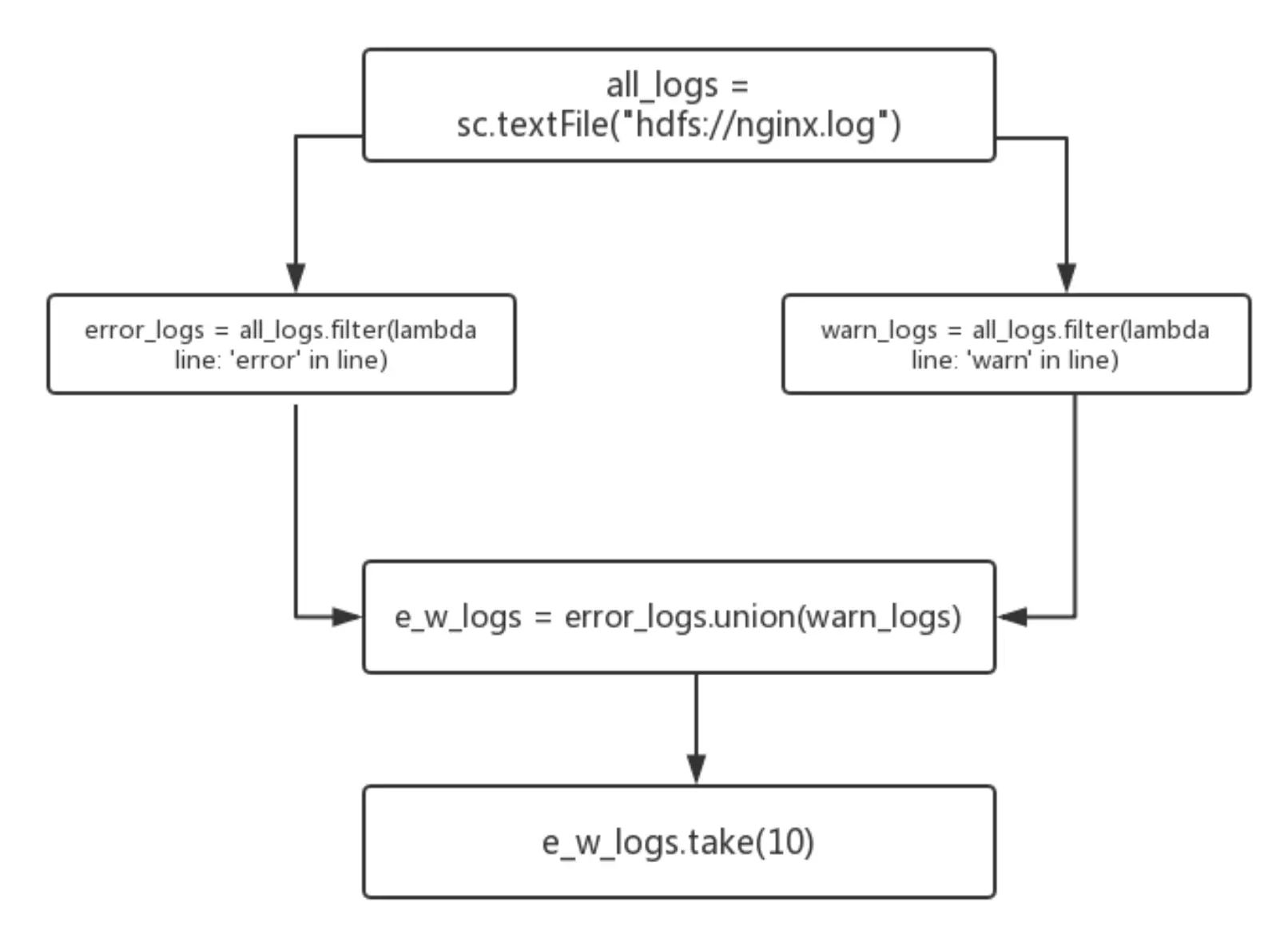
Laziness
- Each RDD have access to it's parent RDD
- NULL is the value of parent for first RDD
- Before computing it's value, it always computes it's parent
- This chain of running allows for laziness
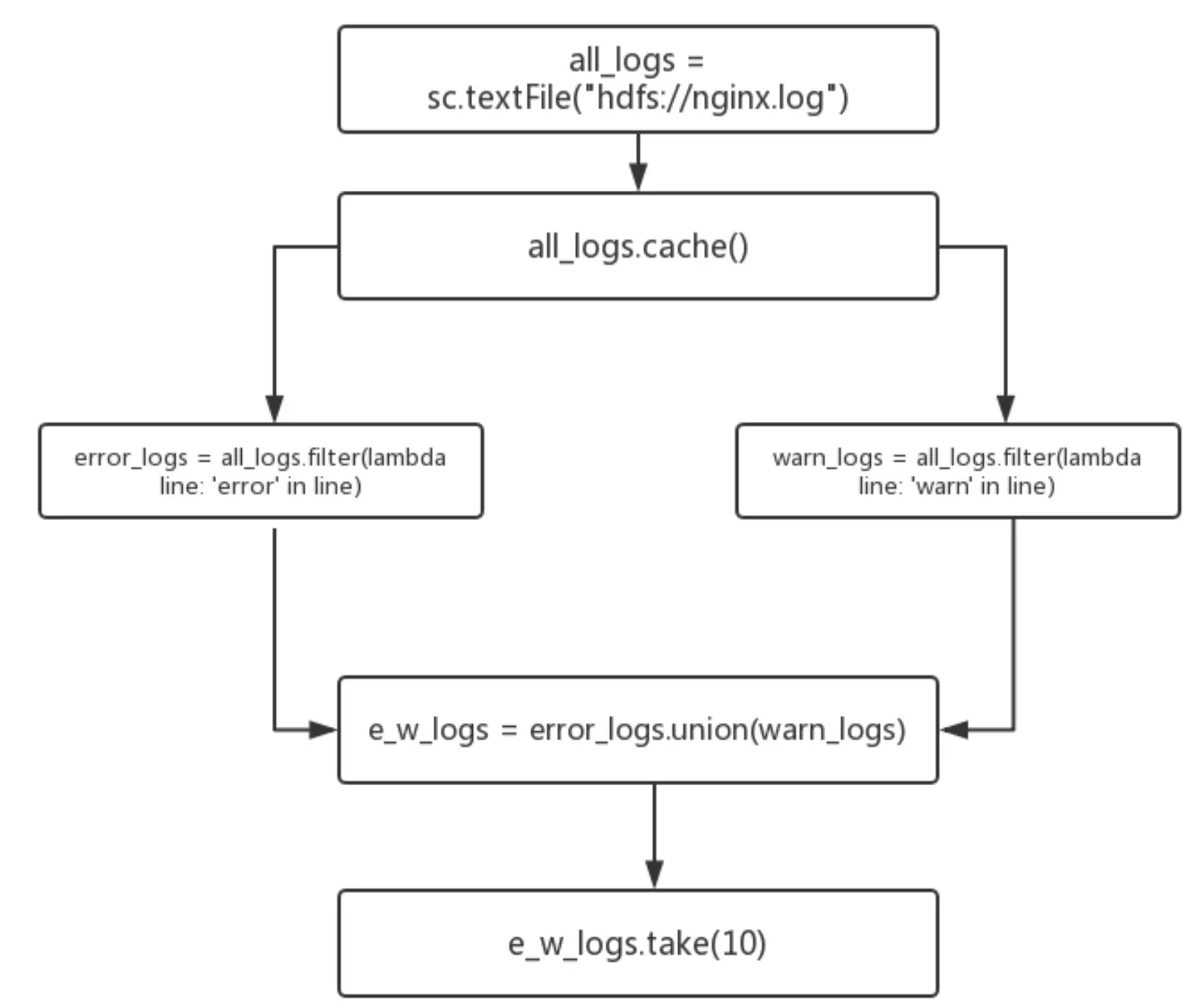
Caching
- cache internally uses persist API
- persist sets a specific storage level for a given RDD
- Spark context tracks persistent RDD
- When first evaluates, partition will be put into memory by block manager
Block manager
- Handles all in memory data in spark
- Response for:
- Cached Data (BlockRDD)
- Shuffle Data
- Broadcast Data
- partition will be stored in Block with id (RDD.id, partition_index)
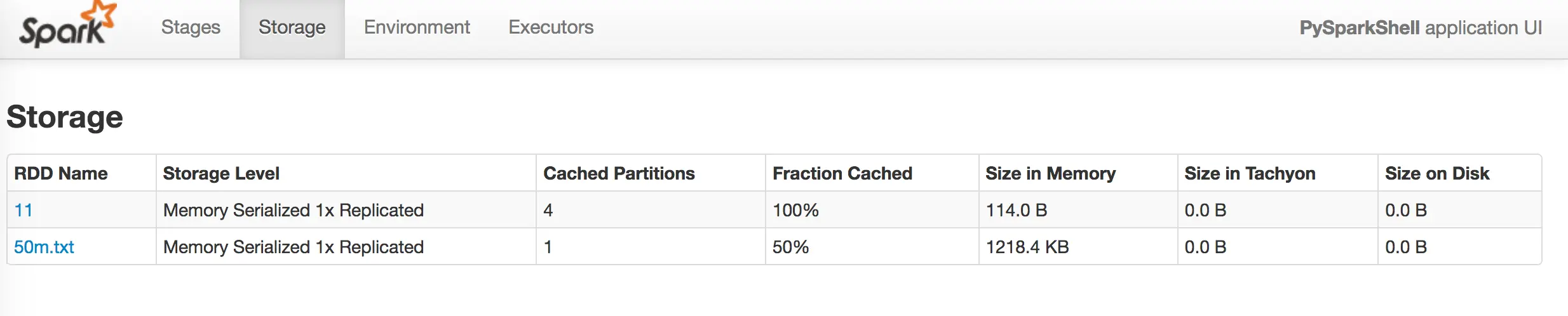

How caching works
- Partition iterator checks the storage level
- if Storage level set it calls
cacheManager.getOrCompute(partition) - As iterator is run for each RDD partition, it's transparent to users
How to create RDD
Operations
- Transformations:
- map
- group-by
- filter
- union
- Actions:
- reduce
- count
- collect
- saveAsTextFile
Three important concepts
- Task
- Stage
- Job
Task
One partition, One Task.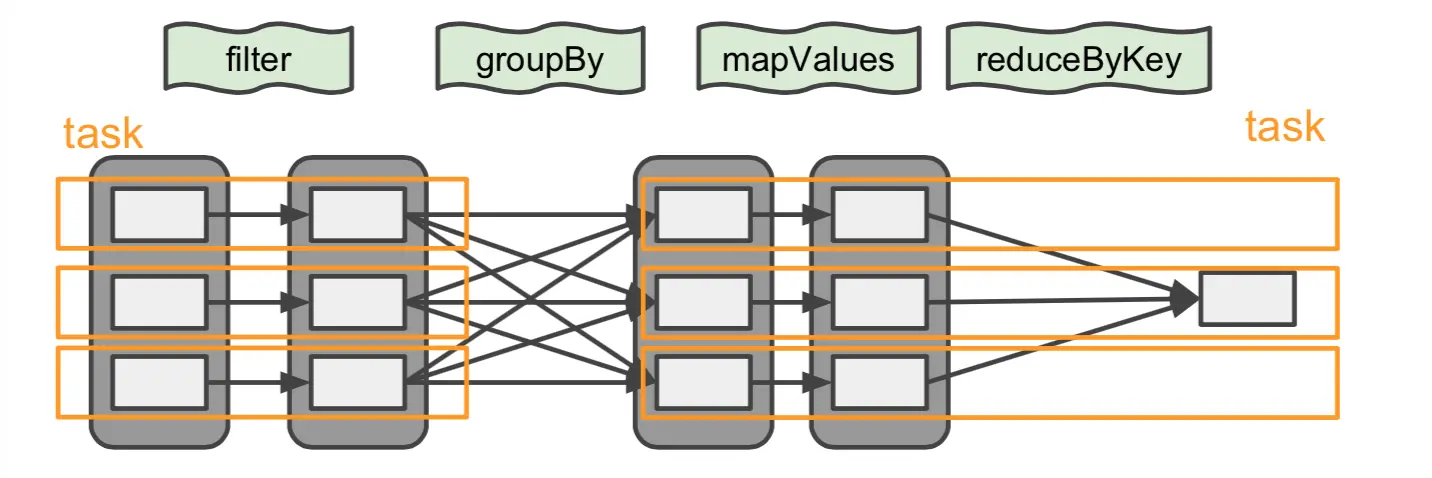
Shuffle
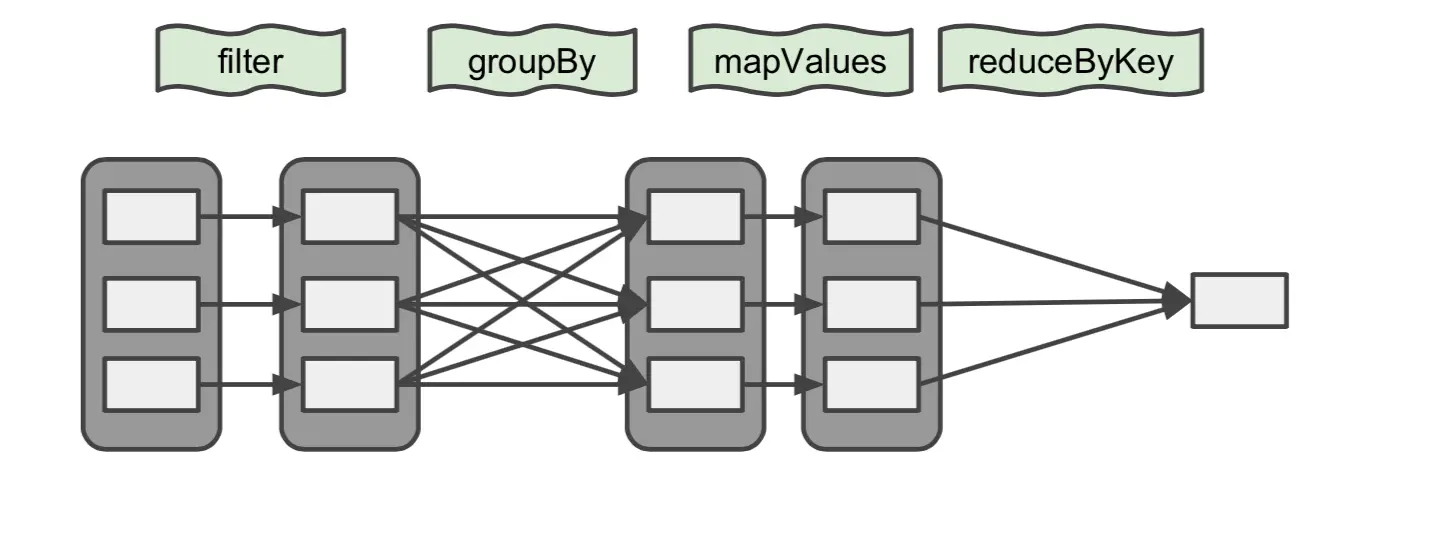
Stage
Separated by shuffle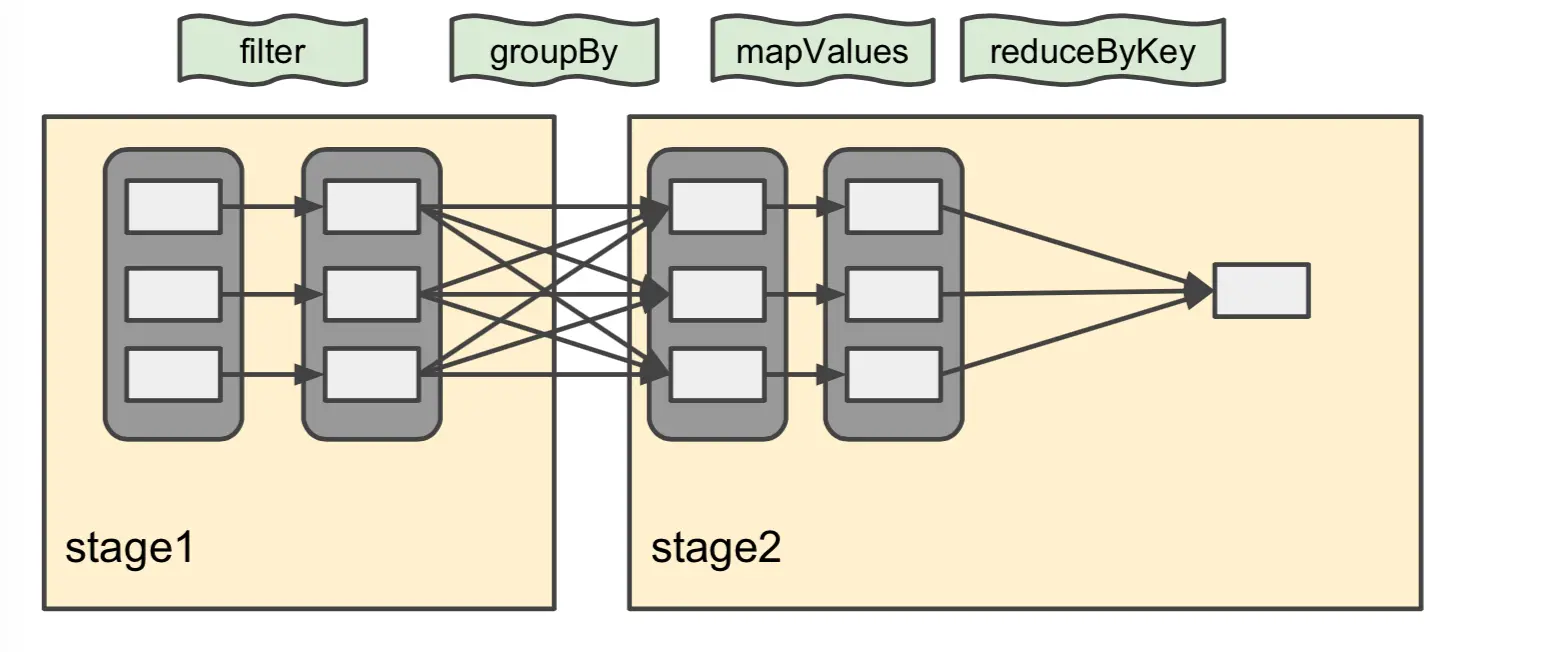
Job
One Action, One Job.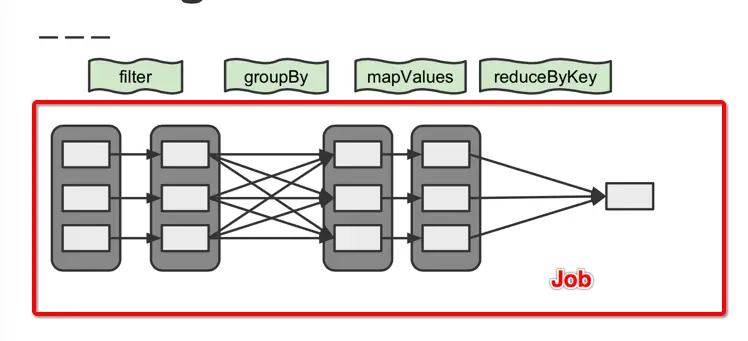
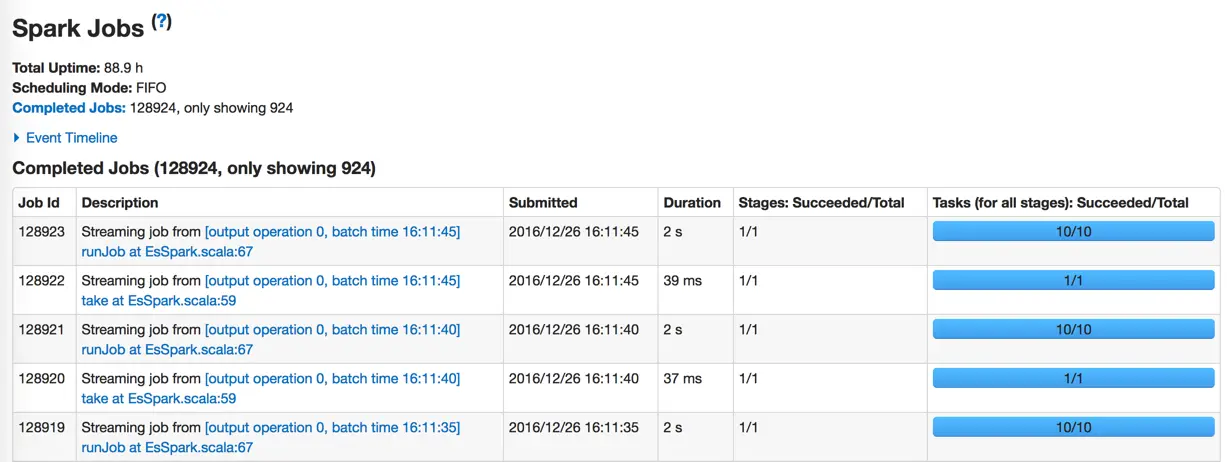
Job UI
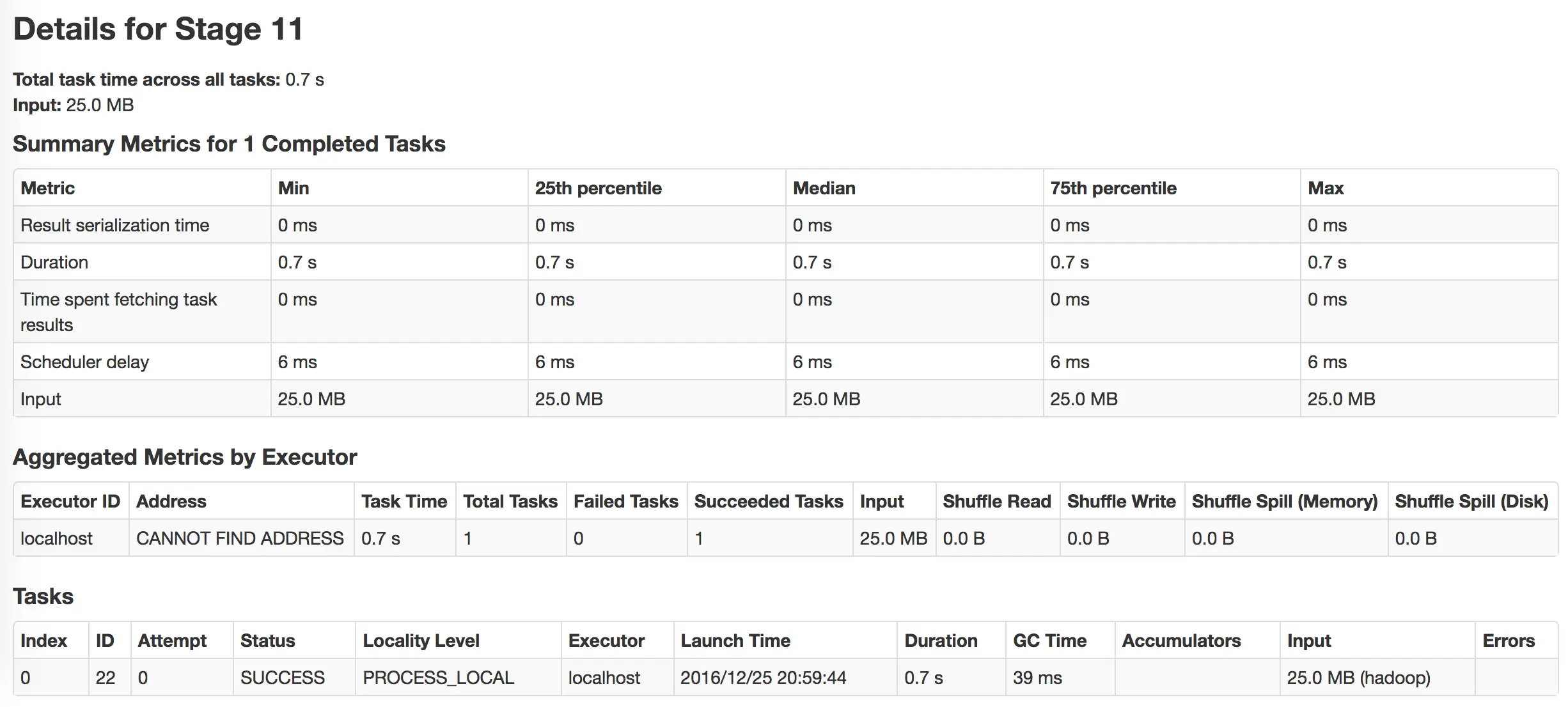
Stage UI
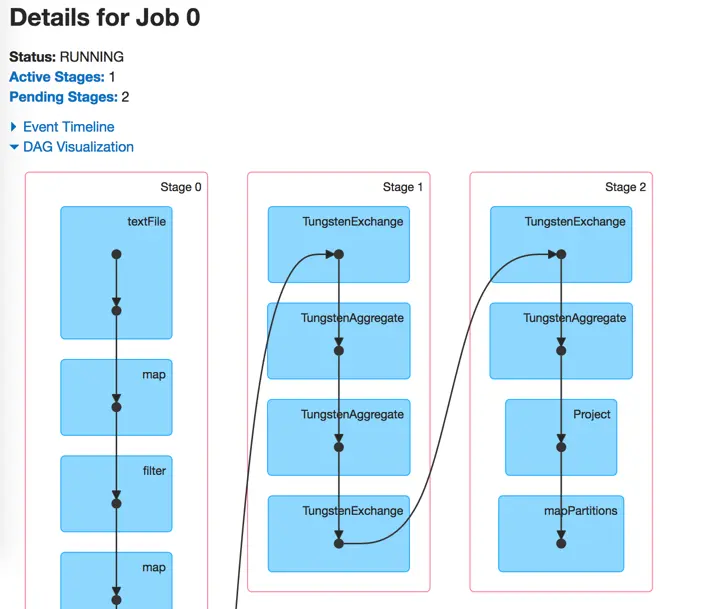
Stage UI
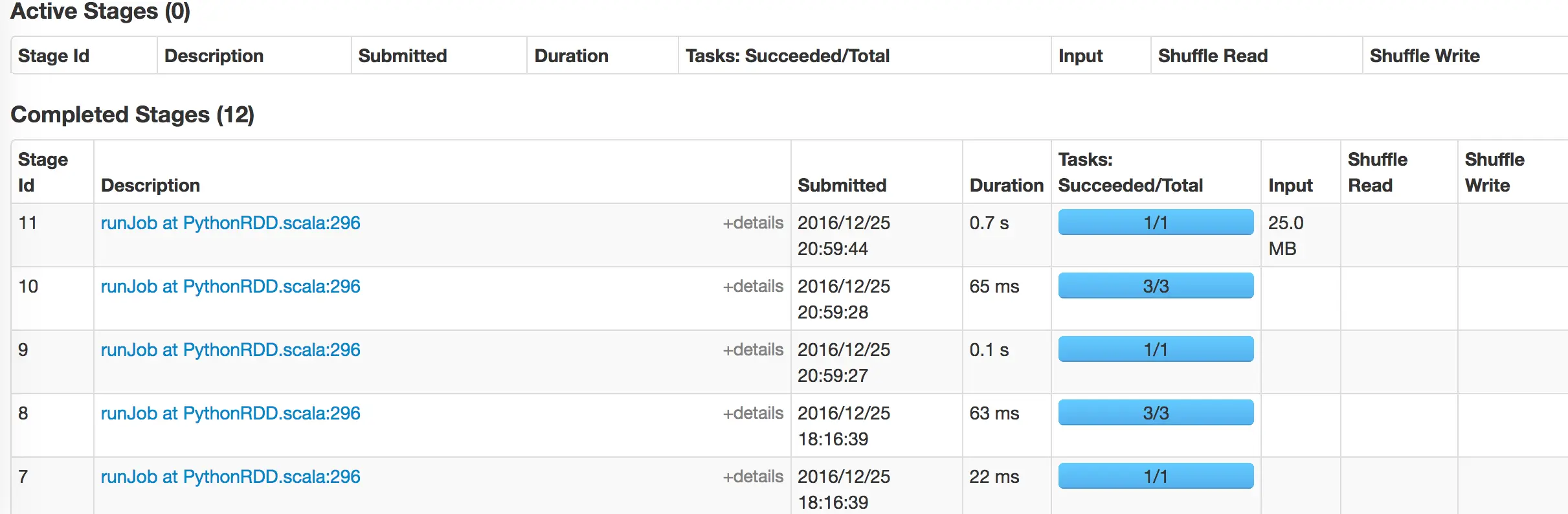
Task UI
Why
- Domain Specific Operators
- Allows developer to express domain specific calculation in cleaner way
- Domain Specific RDD's
- Better way of expressing domain data
- Control over partitioning and distribution